A multisensory experience for the whole body
There is no single piece of equipment that is essential in every multisensory space. The room, its resources and the activities carried out in it should always respond to the characteristics and preferences of its users.
However, when space and budget allow, a waterbed is one of the resources capable of providing a particularly rich whole-body sensory experience.
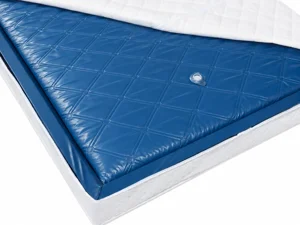
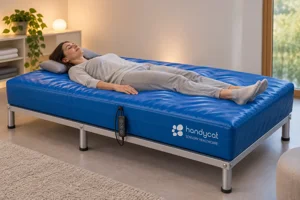
The body rests on a surface that continuously adapts to its shape and responds to every movement. Small changes in position generate gentle movements in the water which are felt over a large part of the body. Touch, pressure, movement and body awareness are therefore experienced simultaneously rather than as isolated stimuli.
A place to feel, not just to lie down
The value of a waterbed goes far beyond providing a comfortable surface. Its movement can be felt throughout the body, while the large contact area provides continuous tactile and proprioceptive information.
Depending on the equipment and configuration, the experience can also be combined with vibration, music or sound, allowing vibrations to be perceived through the body as well as heard.
Lighting, projection, fibre optics or other visual resources can be experienced comfortably from the waterbed, making it an excellent place from which to enjoy many of the other elements in a multisensory environment.
For this reason, a single waterbed can bring together several sensory dimensions in one experience: touch, movement, proprioception, vibration and sound, while also providing a comfortable position from which to experience visual resources.
Movement created by the user
One particularly interesting characteristic of a waterbed is that the user is not necessarily a passive recipient of stimulation. Moving an arm, a leg or the whole body causes the water to move, and this movement returns to the body through the mattress.
The experience can therefore range from quiet relaxation to active exploration of movement and its effects.
Choosing and integrating a waterbed
When planning a waterbed, it is important to consider:
- Its dimensions and the characteristics of the users.
- Ease and safety of access.
- The space required around the bed.
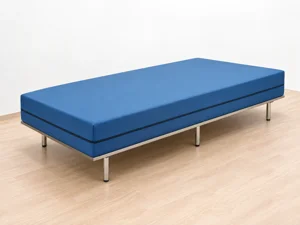
- The characteristics of the mattress and its supporting structure.
- Whether vibration or sound transmission is to be incorporated.
- How it will be combined with lighting, projection and other sensory resources.
- Maintenance and care requirements.
HANDYCAT can help you select and integrate a waterbed according to the users, the available space and the sensory experience you wish to create.
A waterbed is not a compulsory element of a multisensory room. But when it can be incorporated appropriately, it can become one of the places where the largest number of sensory experiences in the room come together.