Sound that can also be felt
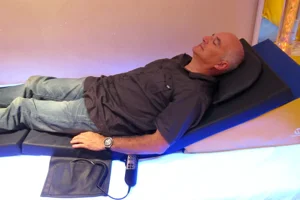
Vibration and vibroacoustics add a bodily dimension to the experience of sound. Instead of reaching the user only through the auditory system, part of the acoustic signal is transformed into mechanical vibration and transmitted through a surface in contact with the body.
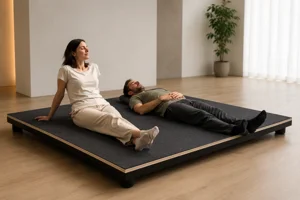
A seat, platform, bed or other suitable surface can therefore allow music and sound to be both heard and felt. Rhythm, changes in intensity and different frequencies become a tactile and bodily experience that complements listening.
Vibroacoustics is much more than bass
Vibroacoustic experiences are sometimes associated exclusively with very low frequencies or powerful bass. At HANDYCAT we take a different approach.
Our vibroacoustic systems are designed to reproduce a broad range of sound frequencies through the body, rather than unnecessarily restricting the experience to the lowest frequencies.
Music is much more than bass. It contains rhythm, melody, harmonics, voices, instruments, changes in intensity and a wide range of frequencies. Transmitting a significant part of this information through the contact surface creates a richer bodily experience, in which sound can be perceived not only through hearing but also through vibration.
The final result depends on the system as a whole. The surface that transmits the vibration, its materials, dimensions and rigidity, the installation, amplification and audio signal all influence what the user ultimately feels.
From a simple vibration to an integrated sound experience
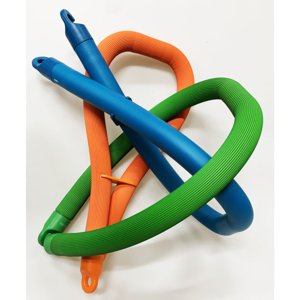
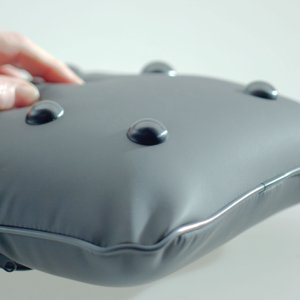
Different resources can provide very different experiences. Some are intended to produce simple vibration as a sensory effect, while a properly designed vibroacoustic system can reproduce much more of the dynamics and nuances of music and sound through the body.
When planning this type of equipment, it is useful to consider:
- The surface or piece of furniture through which vibration will be transmitted.
- The position and contact of the user’s body with that surface.
- The characteristics of the vibroacoustic system.
- The amplifier and its appropriate power.
- The audio source and the type of content to be reproduced.
- The relationship between audible sound and vibration.
- The intensity appropriate for each user and activity.
A system that should be considered as a whole
A good vibroacoustic result is achieved by combining the different components correctly rather than simply adding a vibrating device to a piece of furniture.
HANDYCAT can advise on the selection and integration of amplification, audio equipment and suitable surfaces, from simple vibration resources to complete vibroacoustic systems.
The objective is for vibration to become a meaningful part of the sensory experience and, when sound is used, to allow the person not only to listen to it but also to experience it through the body.